French Drains That Actually Drain.
French drain installation, buried downspout lines, catch basins and swales — built with fall all the way to daylight so water leaves your yard and stays off your foundation. Serving Neenah, Menasha, Appleton, Oshkosh and the Fox Valley.
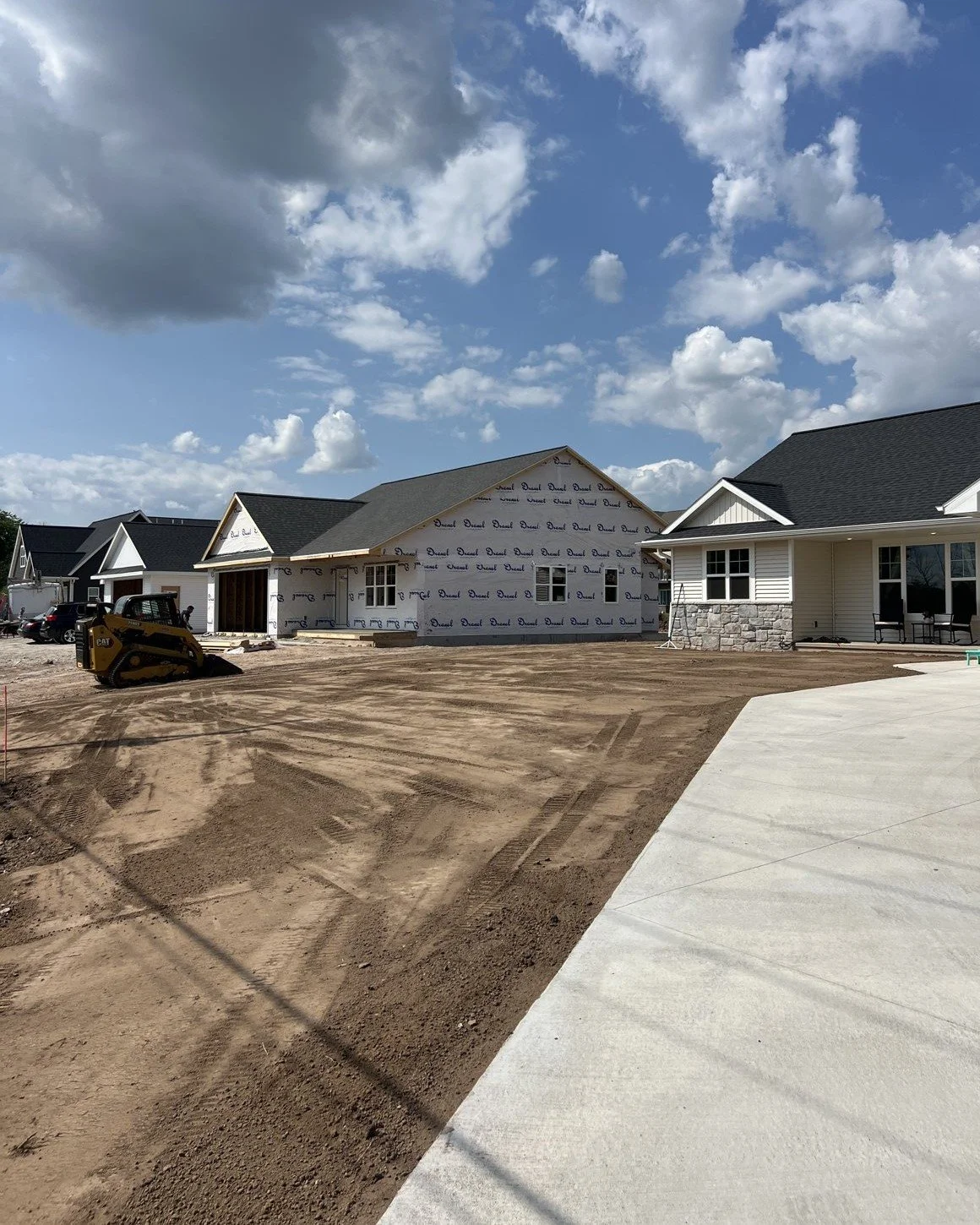
Where water sits, it does damage.
If any of these sound like your place, the water needs a path out.
Standing water after every rain. Same low spot, same puddle, two days later.
A soggy strip by the driveway or garage. Water runs off the hard surface and has nowhere to go.
Water against the foundation. Damp basement walls, wet window wells, soil washing away at the house.
Downspouts dumping at the house. Every inch of rain on the roof lands in one spot by the foundation.
An ice sheet every winter. Melt runs across the driveway and freezes overnight.
Washouts and ruts. Stone and soil moving every time it storms.
What I install.
Every fix starts with the same question: where is the water coming from, and where can it go?
French drains
A trench with fall to daylight, lined with geotextile fabric, perforated pipe set in washed stone. Water soaks into the stone, finds the pipe, and leaves. The fix for wet strips, low corners and water that comes off a neighbor's yard.
Buried downspout lines
Solid pipe run underground from your downspouts to a pop-up or daylight outlet well away from the house. No more splash blocks, no more mowing around extensions.
Catch basins and yard drains
A grate at the low spot that collects surface water and sends it into a buried line. Good where water pools on top of the ground instead of soaking in.
Swales and grading
Sometimes the ground just needs to be reshaped. A shallow swale or a regraded slope can move water without any pipe at all. See Grading & Lot Leveling.
How a French drain gets built.
811 and layout. Locates called before anything gets dug. Then I walk the yard, find where the water comes from, and mark the line to the lowest place it can leave.
Dig with fall. The trench drops the whole way, at least an inch every eight feet, checked as I go so water never sits in the pipe.
Fabric down. Geotextile fabric lines the trench so soil can't wash into the stone and clog it.
Stone and pipe. A bed of washed stone, perforated pipe on top with the holes down, then more stone over it.
Wrap and cleanout. Fabric folded over the top, and a cleanout at the high end so the line can be flushed later.
Daylight and finish. A grate on the outlet end, then topsoil and seed or stone over the trench. Site left clean.
Five things that make or break a French drain.
Most drains that quit early skipped one of these. I don't.
Holes down. Water rises into the pipe from below. Holes up leaves a puddle in the trench.
Washed stone only. Dirty stone packs tight and stops moving water.
Fall the whole way. One flat spot and water sits, freezes and silts up.
Wrapped in fabric. No fabric, and the soil slowly fills the stone.
A real place to go. A drain is only as good as its outlet.
What goes into the estimate.
Every estimate is line-item and in writing — labor, materials, total — and good for 30 days. These are the things that move the number:
Length of the run. How far from the wet spot to where the water can leave.
Depth. A deeper trench means more digging and more stone.
What's in the way. Landscaping, fences, tight side yards, and how close the machine can get.
The outlet. A simple daylight end, or a catch basin and pop-up.
Downspouts tied in. Each one is its own line to the main run.
Finish. Topsoil and seed, sod, or stone over the trench.
Drainage questions, answered.
Do I need a French drain, or just grading?
If the ground slopes the wrong way, grading usually fixes it. If water is coming from somewhere you can't change, like a neighbor's yard, a hillside or a high water table, it needs a drain. Text me photos and I'll tell you which, or both.
Where does the water go?
To the lowest spot it can leave your property: a ditch, a low corner, or a pop-up outlet in the yard. Never onto a neighbor's lot. If there's no natural place for it, I'll tell you up front.
Will it fix water in my basement?
It can if the water is coming from outside. Moving roof and yard water away from the foundation fixes a lot of wet basements. Water coming up through the floor or cracks in the wall needs a basement waterproofing company, and I'll be straight with you about which one you've got.
Will the machine tear up my yard?
It runs on tracks, which spread the weight out. The trench line gets backfilled and finished with topsoil and seed or stone, and I clean up before I leave.
When can you do it?
Text photos anytime, 24/7, and you'll usually have a written estimate the same day. Drainage can be done any time the ground isn't frozen.
Do you call 811?
Every dig. Locates are marked before the bucket touches dirt.
Drainage across the Fox Valley.
Based in Neenah and serving Menasha, Appleton, Oshkosh, Fox Crossing, Grand Chute, Kaukauna, Kimberly, Little Chute, Omro, Winneconne and Larsen. Veteran-owned, licensed and insured.
Related work: Grading & Lot Leveling · Site Prep & Building Pads · Gravel Driveways
Text me photos of the wet spot, best taken during or right after a rain. 920-279-5793, call or text 24/7.